
Our child care programs, summer camp, and forest school are child-centered and inquiry based.
Welcome to Our Childhood Development Series! We’re so glad you’re here.
In this series, we’ll explore the stages of childhood development from ages 2 to 12 that we see in our UCCC programs. Along the way, we’ll highlight typical childhood development, behaviours, and share practical tips to help parents, caregivers, and educators support children as they grow.
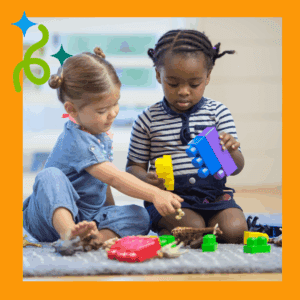
Importantly, we understand that childhood development isn’t a race—and every child’s journey is unique. That’s why our goal is to help families shift from “Why is my kid doing that?” to “Oh, that makes sense—and here’s how I can help.” Just as crucial, we want to help you recognize when something might need extra attention and reassure you that support is available.
Drawing on over 40 years of experience at UCCC, we’ve worked with children at every stage—from toddlers to preteens—and have seen familiar patterns emerge—kids learning to walk, talk, share, test limits, and discover who they are.
So, whether you’re navigating a two-year-old who bites or a ten-year-old who debates everything, this guide is here to help you understand what’s typical, what’s challenging, and how to support children through it all.
What you can expect:
- A roadmap of typical childhooddevelopmental stages
- Insights into curious and challenging behaviours (the struggle is real)
- Support strategies to guide children through each phase
A Broader Look at Childhood Development
As you’ll see, sometimes changes happen quickly and other times there seems to be more gradual change or a plateau. Just like physical growth spurts, children experience developmental spurts too. What remains consistent is that each stage builds on the last—and unfolds in its own time.
In this series, we’ll focus not only on physical growth, but also on the emotional, social, and cognitive development shaping a child’s world.
Repeating Themes Across Ages
While each age has its own unique characteristics, some themes show up again and again:
- Push for Independence: From toddlers declaring “I do it!” to tweens seeking privacy, children are always working toward autonomy.
- Emotional Ups and Downs: Big feelings are part of growing up and learning to manage them is a long process. As children grow, experiences and social relationships become more complex. Effective coping requires new skills, practice, and gaining resilience that starts at a young age and continues into adulthood.
- Social Learning: From parallel play to navigating friendships and cooperative team sports, children are constantly learning how to connect with others.
- Individuality: We’ve mentioned this already, but it bears repeating: developmental charts offer helpful guidance but no two children follow them exactly. Patience and flexibility go a long way.
Goals of the Series
Posts will focus on a specific age range, reflecting years spent watching children grow. Sometimes growth happens in leaps, sometimes in stumbles—but always forward.
We’ll offer a practical, heartfelt look at the behaviors, and needs shaping each stage. Our goal is to offer insights based on real-life, cumulative experience. We’ll discuss common behaviours, challenges, and ways to support healthy childhood development.
Rather than offer checklists, we want to foster understanding. Knowing what’s happening beneath the surface, you can respond to your child with confidence and care. We’ve seen a lot over the years. While we haven’t seen everything, we’ve learned to focus on what truly matters in a child’s development.
We hope you’ll join us.