
Our child care programs, summer camp, and forest school are child-centered and inquiry based.
With the seasons shifting and daily routines evolving, it’s an ideal moment to reflect on how children spend their time outdoors — and to explore the concept of Repeat Play, which is a staple at Upper Canada Child Care (UCCC). As experts in early childhood education, we know that play doesn’t need to be complicated or tied to a specific season to be meaningful. In fact, it’s often the small, repeated experiences in familiar outdoor spaces that leave the most lasting impact.
What is Repeat Play?
Simply put, Repeat Play is the opportunity for children to return to the same play space again and again — each time with fresh curiosity. As they revisit familiar outdoor environments, children begin to notice new details, explore more deeply, and build a sense of confidence in — and stewardship of — their surroundings.
Whether it’s a backyard, a nearby park, a childcare play area, or Forest School, repeated visits help strengthen children’s connection to the natural world. Moreover, these visits offer endless opportunities for creativity, problem-solving, and social growth.
Why Repeating the Same Activity is Actually a Good Thing
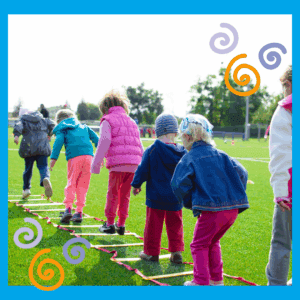
Repetition is a key part of how children learn. When children return to a familiar activity — digging in the same patch of dirt, climbing the same tree, or observing the same birdhouse — they’re not simply repeating; they’re:
- noticing new details each time, sharpening observation skills;
- experimenting with different approaches, building problem-solving skills;
- increasing confidence and independence as they master small challenges; and
- strengthening social skills when playing alongside other children.
In other words, even seemingly simple actions have layers of learning when repeated with curiosity. At UCCC, we regularly see children return to the same activities again and again — each time discovering something new and building skills they carry forward.
What Makes a Great Outdoor Play Space?
Interestingly, some of the best spaces for Repeat Play are also the simplest. For example, think of environments with:
- Trees, shrubs, and plants
- Rocks, sand, and dirt
- Places to dig, climb, and balance
Such environments invite exploration and children thrive in them. From a patch of trees to climb, to a pile of rocks to balance on, to dirt to dig in, small, natural elements become infinite sources of discovery when visited over time in all seasons. For further insight, see Defining Forest School Part 1- Why visit the same land many times? – Child and Nature Alliance of Canada
The Best Kind of Outdoor Play
Ultimately, the richest play happens when children take the lead. Meaning children are free to direct their own play in safe and naturally rich environments where their curiosity guides the experience. More than just fun – activities wading, digging, catching bugs, smelling flowers, or climbing rocks are ways for children to experiment, problem-solve, and connect with the world around them. By stepping back while ensuring safety, educators, parents, and caregivers create space for authentic, meaningful learning.
5 Guided Repeat Play Activities for Families
To support families, here are five simple, flexible, and educational Repeat Play ideas that can be enjoyed year-round, regardless of season or weather. Each example encourages children to observe, experiment, and learn through curiosity:
1. Repeat Play through Birdwatching and Nature Observation
Why it’s valuable: Observing birds and other wildlife teaches attention to detail, patience, and awareness of natural cycles.
How to do it: Pick a tree, garden, or quiet outdoor spot and watch for nests, feeding habits, or young birds. Use online resources to identify wildlife together. Revisit the same area several times over weeks to notice changes. Consider adding a birdhouse or feeder for ongoing learning.
2. Repeat Play using Micro-Habitats and Bug Exploration
Why it’s valuable: Discovering insects, worms, and other tiny creatures helps children understand ecosystems, encourages gentle care, and builds curiosity.
How to do it: Place a small board, cardboard, or log in a garden or yard. After a few days, gently lift it to observe insects underneath. Revisit the same spot to see changes over time, always returning the item to keep the habitat safe.
3. Repeat Play in Gardening and Plant Tracking
Why it’s valuable: Planting seeds and monitoring growth teaches responsibility, observation, and understanding of plant life cycles.
How to do it: Use pots, window boxes, or garden patches to plant seeds. Together you can water, measure, and record changes regularly. Repeating the process helps children notice subtle growth patterns and seasonal changes.
4. Repeat Play during Seasonal Nature Walks
Why it’s valuable: Repeated walks in the same outdoor space encourage noticing small changes, from leaf color to animal activity, fostering observation and critical thinking skills.
How to do it: Pick a local park or neighborhood path and explore together. Encourage children to point out differences from a previous visit — fallen leaves, seeds, bird activity, or weather changes. Make it a weekly habit to see patterns and seasonal shifts. Consider doing a scavenger hunt to add more interest.
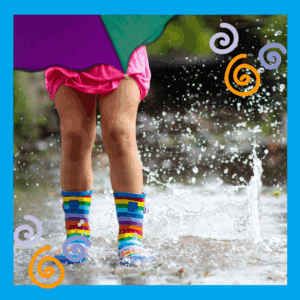
5. Repeat play while doing Weather-Based Experiments
Why it’s valuable: Engaging with different weather conditions teaches cause-and-effect, adaptability, and problem-solving.
How to do it:
- On rainy days – play with puddles, floating leaves, or gentle water experiments.
- On windy days – fly kites, paper planes, or observe how leaves and seeds move.
- On snowy or icy days – explore snow structures, ice shapes, or track footprints.
Repeat these activities to notice differences in weather impact and refine strategies.
Everyday Play, Lifelong Benefits
In conclusion, Repeat Play helps children feel grounded, curious, and confident. By returning to the same outdoor spaces and noticing how they change, children layer skills, build resilience, and discover the world in richer, deeper ways than adults might initially see. Even when children appear to “do the same thing,” they are learning problem-solving, social interaction, observation, and creativity — while having fun. Essentially, at Upper Canada Child Care, we see outdoor play as a lifelong gift. It doesn’t just build skills for today; it fosters resilience, creativity, and connection that children carry with them through every season and stage of life.